The Sins of Sodom and Gomorrah Were Worse Than You Imagi
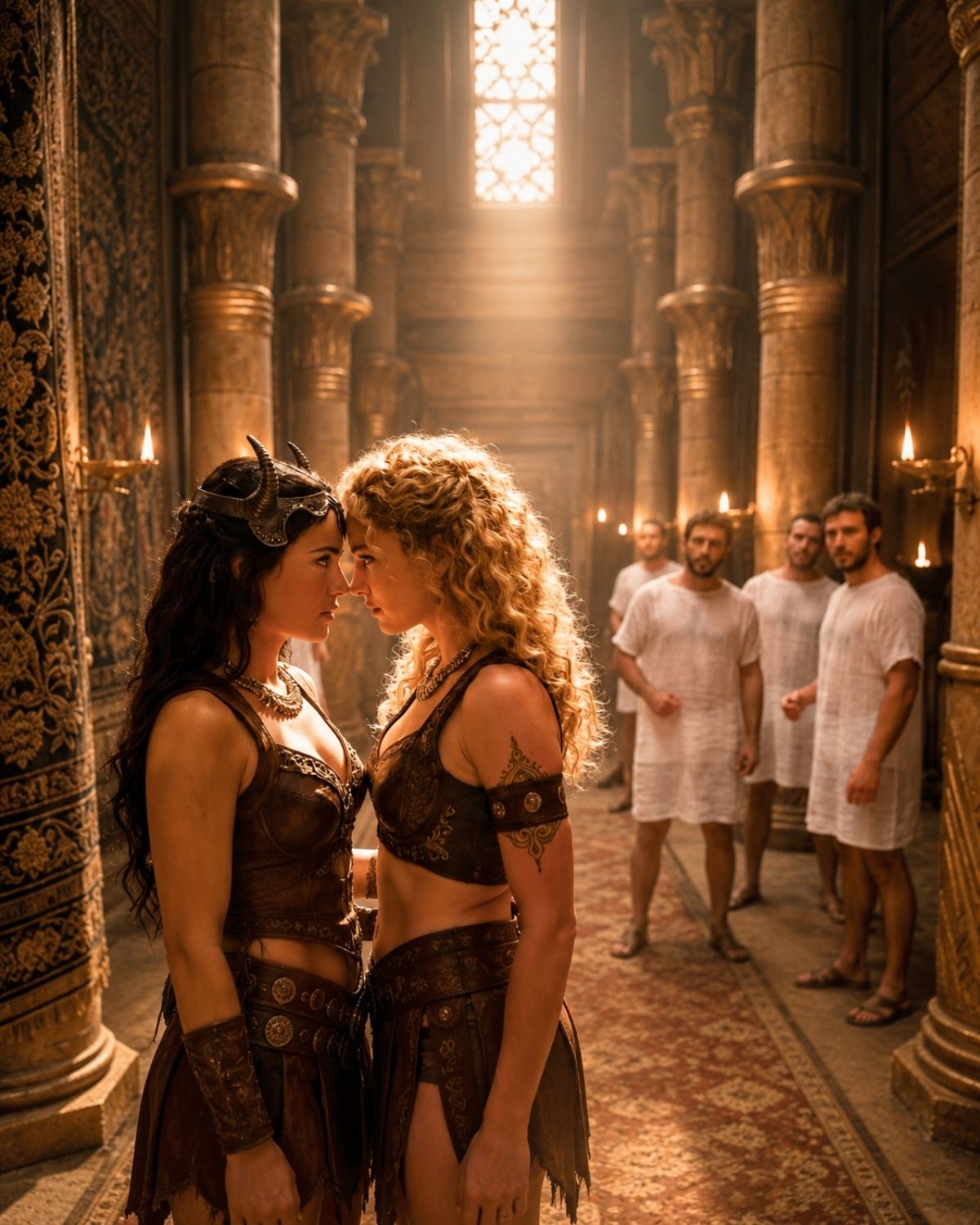
When you hear the name Sodom, the first thing that comes to mind is sexual sin, right? But what if I told you that, according to the biblical prophets themselves, that was not the only reason, and perhaps not even the main one, for fire to fall from heaven? Today, you are going to dive into the list of crimes of a society that had everything but chose to lose it all. And you will discover that Sodom’s greatest sin is something happening very close to us right now.
Ezekiel chapter 16, verse 49. The prophet is speaking directly to Jerusalem, and he compares the holy city to Sodom. But notice carefully what he says: “Behold, this was the iniquity of your sister Sodom, pride, fullness of bread, and abundance of idleness. And she did not strengthen the hand of the poor and needy.” Did you read that right? Pride, abundance, idleness, oppression of the poor. Not a single word about sexual immorality. The first sin on the list is pride. The same sin that cast Lucifer down from heaven. But pride in what? Where did such arrogance come from?
Let’s go back in time to the year 2000 before Christ, in the Jordan Valley, south of what is today Jordan. Imagine a green plain, naturally irrigated by the river cutting through the land like a vein of life. Fields of golden wheat swaying in the wind, laden fig trees, generous date palms, crystal clear water flowing through channels. The book of Genesis describes this place with a phrase that makes you stop and think. Lot lifted up his eyes and saw all the plain of the Jordan, that it was well-watered everywhere, like the garden of the Lord, like the land of Egypt. Comparing a land to Eden and the Nile was the highest praise possible. And it was there that the Canaanites, descendants of Ham, built Sodom.
In the year 2005 after Christ, archaeologists began excavating a site in Jordan called Tall el-Hammam. And what they found left the scientific world in shock. Walls four meters thick, stone palaces, administrative buildings on an elevated acropolis—a metropolis with a capacity for up to 40,000 inhabitants. This wasn’t a simple biblical village. It was a supercity of the ancient world. Sodom controlled trade routes between Mesopotamia and Egypt. Whoever passed through paid taxes. Gold circulated. Silver gleamed on merchants’ tables. Elite houses had two stories, inner courtyards, and polished stone floors. The poor? They lived in adobe shacks without foundations, sharing cramped spaces. The difference between rich and poor wasn’t just economic; it was visual. It was a daily declaration: “Your life isn’t worth as much as mine.”
But here is the point: Sodom wasn’t poor and violent; Sodom was rich and violent. Prosperity didn’t generate gratitude; it generated self-sufficiency. It generated the mentality that they didn’t need God because they had everything. And when you think you are superior to others, you are one step away from the second sin. Pride always brings a companion, and that companion transforms arrogance into cruelty. Sodom had laws—written laws, laws that judges applied at the city gates. But these laws didn’t protect the weak; they protected the powerful. And one of these laws, you will not believe it existed: the law stated that it was forbidden to give food to strangers, forbidden to offer shelter, and forbidden to help in any way. The punishment? Death. It wasn’t just indifference; it was a system.
Ezekiel wasn’t exaggerating when he said Sodom did not strengthen the hand of the poor and needy. In the ancient world, the city gate was where justice happened. Elders sat there; judges heard cases. Laws were applied. It was the open-air tribunal. And in Sodom, this sacred place had been corrupted. Isaiah compares Jerusalem to Sodom and says something devastating: “Your hands are full of blood. Seek justice. Help the oppressed. Defend the orphan.” The core of the problem was exposed. The weakest were exploited.
The Babylonian Talmud records ancient traditions about Sodom’s laws, and some are disturbing. At the gates, there were female judges whose very names were declarations: Liar, Forger, Perverter of Justice. One law said the following: if a man wounded his neighbor and drew blood, the wounded one should pay the aggressor. Why? Because the aggressor had performed a “medicinal bloodletting.” The law became a joke. Justice became a maze where only the powerful knew how to navigate. And this law didn’t stay just on paper. The Talmud records the case of a young woman who gave bread to a beggar. When they discovered it, they covered her body with honey and placed her on top of the wall. The bees came, and she died slowly in agony. Her scream, according to tradition, was what reached God’s ears.
Now, think with me. Sodom had everything: water, fertile land, commerce, wealth. But it turned abundance into a weapon. It used law to protect the strong and crush the weak. And this wasn’t an accident. It was a choice. Exodus chapter 22: God gives Israel a law that was the exact opposite of Sodom. “You shall not afflict any widow or orphan. If they cry out to me at all, I will surely hear. And my wrath will be kindled.” God takes this seriously, because oppressing the weak isn’t just social injustice. It is a direct attack on God’s heart. Sodom did exactly what God forbade, and thought it was safe within its four-meter-thick walls. But there was a third sin growing, a sin born when you have everything and don’t need to fight for anything. A sin that transforms free time into a search for increasingly extreme pleasures.
“Fullness of bread and abundance of idleness.” This was Ezekiel’s third accusation against Sodom. And it seems harmless, right? But it wasn’t. Because when you have everything and don’t need to fight for anything, something inside you begins to rot. Sodom knew no hunger. The fields produced effortlessly. Caravans brought gold. Warehouses were full. Life was comfortable, and comfort bred boredom. Imagine waking up in a city where no one needs to work hard, where food is guaranteed, where money circulates without sweat. What do you do with so much free time? At first, parties, music in the squares, wine on tables, laughter echoing through streets. But parties repeat themselves. Music loses its shine. Wine no longer satisfies. And then you seek the next level.
Sodom had temples, not to Abraham’s God, but to Baal, to Ashtoreth—gods of fertility, gods who promised pleasure without limits. And in these temples, the sacred and profane mixed. Priests who didn’t teach righteousness, rituals that celebrated the body, not the spirit. Practices that turned worship into a spectacle of desire. What was hidden became public. What was shame became pride. And the entire city normalized what God called abomination. Jude verse 7 describes it this way: “Sodom and Gomorrah gave themselves over to fornication and went after strange flesh.” Going after strange flesh. It wasn’t just immorality; it was insatiable pursuit. It was escalation. First, permitted pleasures; then, forbidden pleasures; then, pleasures that violated nature itself.
Leviticus chapter 18 lists Canaanite practices God prohibited, and ends with a warning: “Do not defile yourselves with any of these things, for by all these the nations I am casting out before you have become defiled. The land became defiled, and I punished it for its iniquity.” The land became defiled. It wasn’t a metaphor. It was a spiritual reality. Sodom had crossed lines that could not be uncrossed. And the worst was yet to come. Because on one specific night, something would happen that would expose that city’s complete rottenness. Something that would make heaven open, and Sodom’s time would end.
Genesis chapter 19. Lot was sitting at the city gate when he saw two men approaching. Something about them was different. The way they walked, the gleam in their eyes, the dignity they carried. Lot immediately stood up, bowed with his face to the ground, and said, “My lords, turn aside to your servant’s house. Stay the night. Wash your feet.” The men refused, saying they would spend the night in the square. But Lot insisted, almost begged, because he knew what happened in Sodom’s streets after the sun went down. The angels accepted, entered the house. Lot prepared unleavened bread, and they ate.
But before they lay down, the news had already spread. Beautiful strangers at Lot’s house. And then something happened that exposed that city’s complete rottenness. The men of Sodom surrounded the house. Young and old, all of them, from the smallest to the greatest. They pounded on the door, shouted, demanded: “Where are the men who came to your house tonight? Bring them out to us, that we may know them.” It wasn’t desire. It was domination. It was humiliation as a weapon. It was collective sexual violence against defenseless strangers. Sacred hospitality, which throughout the ancient world was an inviolable law, was being destroyed before God’s eyes.
Lot went out, closed the door behind him, and tried to negotiate with the mob: “My brothers, I beg you, do not act so wickedly. I have two daughters who have not known a man. Let me bring them out to you, and do to them as you please. Only do nothing to these men.” Lot’s offer was desperate and morally horrific, but he was trying to protect his guests at any cost, because that was the law of hospitality. The crowd rejected it and turned their fury against Lot: “Stand back. This fellow came to sojourn, and he would play the judge? Now we will deal worse with you than with them.” They rushed at the door, tried to break in, wanted Lot, too.
And then the angels acted. They pulled Lot inside, shut the door, and struck the men with blindness. But even blind, they kept groping the wall, searching for the entrance. Even without sight, the violence did not stop. And that is when the angels revealed who they were: “Have you anyone else here? Sons-in-law, sons, daughters, anyone you have in the city, bring them out of this place. For we are about to destroy this place. The outcry against them has become great before the Lord, and the Lord has sent us to destroy it.”
Lot ran to his sons-in-law, begged them to leave, warned about the imminent destruction. They laughed at him, thought he was joking, and stayed to die. When dawn broke, the angels grabbed Lot, his wife, and his two daughters by the hands and dragged them out. God’s mercy still operated, but time had run out. “Flee for your life. Do not look back. Do not stop anywhere in the plain. Flee to the hills.” And while Lot ran, heaven opened. The Lord rained on Sodom and Gomorrah sulfur and fire from the Lord out of heaven. And he overthrew those cities and all the valley and all the inhabitants of the cities and what grew on the ground.
Lot’s wife looked back and became a pillar of salt. Jesus, centuries later, would say, “Remember Lot’s wife.” Because looking back was more than curiosity. It was attachment. It was longing for what should be abandoned. It was a heart that remained in Sodom even when the body fled. Abraham went up to the hills the next morning and looked toward Sodom. All he saw was dense smoke rising from the earth, like smoke from a furnace.
In the year 2021, scientists published a study in the journal Nature Scientific Reports. They found evidence of an airburst over Tall el-Hammam. An asteroid or comet exploded in the atmosphere around the year 1650 before Christ. The temperature exceeded 2,000 degrees Celsius, vitrified pottery, trinitite glass—the same material found in nuclear tests—melted salt covering everything. The land remained barren for centuries. Nothing grew. No one inhabited it. Judgment wasn’t a metaphor. It was a real catastrophe.
But the story doesn’t end in destruction. It ends with a question. Isaiah used Sodom to warn Jerusalem. Jeremiah did the same. Amos, Zephaniah, Ezekiel. Jesus compared cities that rejected his message to Sodom. Why? Because Sodom is a mirror. It is not just the past. It is a warning for every society that follows the same path. Pride, abundance, idleness, oppression of the weak, normalization of what God calls abomination. This cycle didn’t die with Sodom.
So the question that remains is this: where do you see pride disguised as self-esteem today? Where is there abundance, but neighbors go hungry? Where does law protect the powerful and crush the weak? Where has free time become an insatiable search for pleasures that never satisfy? Where is violence against the vulnerable normalized?
Sodom teaches us that having isn’t enough. What matters is what we do with what we have. That prosperity without justice is fragile. That wealth without mercy is a curse. That there are moments in life where the only possible direction is forward, without looking back. Proverbs chapter 14, verse 34: “Righteousness exalts a nation, but sin is a reproach to any people.” Sodom had four-meter walls, stone palaces, wealth accumulated over generations, but none of that saved it. Because God doesn’t weigh gold. He weighs hearts. And when a nation’s heart rots, walls do not matter.
To delve deeper into the psychological and societal decay, we must understand that the collapse of Sodom was not an overnight event; it was a slow, creeping rot. When a society becomes disconnected from the reality of its own fragility, it begins to view its own success as a form of divine entitlement. This is the seed of the “fullness of bread.” When individuals possess all that they require, the necessity for communal reliance diminishes. In the ancient world, the community was the primary safety net. When the law shifted from protecting the vulnerable to safeguarding the status of the elite, it signaled that the collective morality had inverted.
The incident at the gate, where the mob sought to violate the visitors, is a profound study in the pathology of power. It was not merely about a perverse sexual act; it was about asserting total control over the “other.” By forcing themselves upon strangers, the people of Sodom were effectively stripping away the identity and humanity of those they deemed outsiders. This is the ultimate expression of the “pride” mentioned by Ezekiel—the belief that one’s own desires and the preservation of one’s own dominance are superior to the universal moral laws of hospitality, empathy, and kindness.
Furthermore, we must consider the environmental and historical context provided by the archaeological evidence found at Tall el-Hammam. The sheer magnitude of the destruction, equivalent to a modern-day high-yield explosive event, underscores the suddenness of the end. Yet, the biblical narrative insists on the persistent warning that preceded it. This suggests that while physical destruction is sudden, the moral destruction of a society is a process. It happens in the quiet moments, in the normalization of injustice at the city gate, in the laughter at the expense of the poor, and in the refusal to listen to those who warn of the coming precipice.
Consider the role of Lot’s wife. Why was looking back so fatal? Her backward glance was not a simple act of observation; it was a manifestation of her heart’s orientation. Despite having been physically delivered from the city, her spirit remained tethered to the life she had known there—a life of “abundance and idleness.” She represented the internal struggle of many who attempt to leave a toxic environment but cannot let go of the comforts that kept them bound in the first place. Her transformation into a pillar of salt remains a stark reminder that physical movement without a change of heart is incomplete.
This serves as a cautionary tale for modern civilizations that prioritize technological and material growth above all else. We find ourselves in an era of unprecedented prosperity. We have reached heights of comfort that would be unrecognizable to the ancient world. Yet, we must examine if our own “walls”—whether they be political, financial, or social—are serving to isolate us from the fundamental duties of humanity. Are we, like Sodom, using our laws to protect our own interests while turning a blind eye to the cries of the oppressed? Are we using our leisure time to fill a void that only meaning and connection can satisfy?
The story of Sodom is an uncomfortable mirror. It forces us to ask if we have become comfortable in a state of moral decay, assuming that our current stability is permanent. The prophets, in their various references to this city, were not engaging in mere historical recount; they were issuing an urgent call to repentance. They understood that when a society loses its capacity for empathy and justice, it has essentially signed its own death warrant. The “outcry” that reached the ears of the Lord was not the result of a single bad day; it was the accumulation of a lifestyle that disregarded the value of others.
The lesson is clear: progress without character is a dangerous path. If we continue to build our structures on the shifting sands of arrogance and indifference, we are setting the stage for our own collapse. We must learn to value the “poor and needy,” for their presence is the litmus test of a nation’s righteousness. We must reconsider our definitions of “success” and “leisure,” ensuring that they do not degenerate into a pursuit of empty pleasures that eventually erode our very soul.
Ultimately, the destruction of Sodom is a testament to the fact that there are limits to human autonomy when that autonomy is used to facilitate cruelty. It is a reminder that there is a moral arc to the universe, and while it may seem that the powerful can evade consequences for a long time, the weight of their choices eventually bears down. We are all living in a time that echoes these ancient concerns. We are all being given the opportunity to choose a different path—to move toward justice, to look after the vulnerable, and to reject the pride that tells us we are self-sufficient.
Do not let the story end with the fire falling. Let it end with the realization of the choice we have today. The cycle of pride, abundance, and idleness is a powerful undertow, but it is not inevitable. We can choose to be the ones who open the door to the stranger, not to exploit them, but to offer them the sanctuary of our own integrity. We can choose to use our resources to lift others rather than to fortify our own comfort. The story of Sodom is a mirror for our society, but it is also a map. By recognizing where we have mirrored its failings, we can change course and walk in a direction that leads to life instead of smoke.
Think of this not as an end, but as a beginning of awareness. Every day, we are faced with decisions that reflect our values. Do we stand with the powerful, or do we stand for what is right? Do we value convenience, or do we value character? The answers to these questions are what determine the foundation upon which we stand. Sodom had thick walls, but they were ultimately sand in the face of the consequences of their actions. Let us build something stronger—something that doesn’t just withstand the test of time, but adds goodness to the world. Which of these sins of Sodom impacted you?


No comments:
Post a Comment