AI and Apostasy

Is All Progress Good for Mankind? From the fall of man,1 humanity has always been on a pathway of self-deception which ultimately leads to destruction. Thinking themselves wise, they have consistently become fools.2 Like the people after the flood judgment of God,3 they thought they could use their ingenuity to enhance their existence in the land. “And they said, Go to, let us build us a city and a tower, whose top may reach unto heaven; and let us make us a name, lest we be scattered abroad upon the face of the whole earth.”4 Then we see God’s reaction to this technological leap. “And the LORD said, Behold, the people is one, and they have all one language; and this they begin to do: and now nothing will be restrained from them, which they have imagined to do.” 5
Is there a prophetic parallel here with the downside of technological advancement? I don’t think the issue was the bricks or building a city; the problem arose when they wanted to “make a name for ourselves.” Perhaps instead of congratulating humanity because of the great technological advancements, we need to stop asking, “What can we do?” Instead, we ought to ask, “What should we be doing?”
The Industrial Age enabled mankind to greatly increase productivity. From the 1760s onward, machines were created to tirelessly labor where humans could not, either in quantity or quality. Mankind had to adapt and learn to work alongside these soulless behemoths.
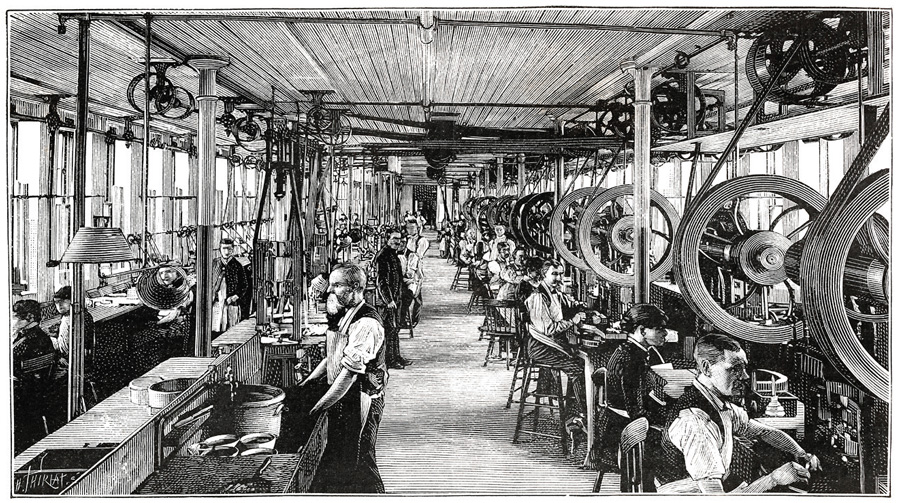
As the workforce moved from farms to factories, there was a measurable change in the structure of society. With the increase of goods and wealth, the general consensus in developing nations was that the move to mechanization would continue to provide humanity with a better life.
 The Atomic Age began with the first detonation of a nuclear weapon in 1945 and marked a transformative era in science, technology, and global politics. As the Cold War began, a new monster was spawned. For the first time, scientists had unlocked a force that had the capability to wipe out all life on Earth. I grew up in the post-World War II era when the shadow of nuclear anxiety cast its dark cloud over every aspect of human existence. Given its catastrophic consequences, the use and abuse of atomic energy seemed to be like the proverbial “genie is out of the bottle.”6
For the following decades, humanity grew more and more comfortable with the notion that instant annihilation was always a possibility. Like a child sleeping in a cage next to a sleeping lion, this problematic possibility was pushed to the back of other urgent problems so that life could continue as if there was no threat at all.
The Space Age began in the 1950s as the race to the moon captivated the imagination and efforts of science and industry. As a natural progression of the Industrial Age, machines were now used in ways previous generations could not have imagined. Because of the increased complexity of these space-bound machines, engineering accuracy became essential, and the Computational Revolution was brought to the forefront.
This revolution was built on the discoveries of Alan Turing, who introduced the concept of the universal Turing machine.7 This abstract device demonstrated that a single machine could execute any computation expressible as an algorithm. Soon, research accelerated computing technology. Electronic computers emerged as practical machines rather than theoretical constructs. With the advancements in digital storage, computers could then process even more information. As computers became more powerful and available, the labor-intensive process of analysis was shifted to these new servants of the modern world.
The Information Age, or Digital Age, is characterized by the spread of the Internet and information technology. With this new information highway, individuals were able to access more information than ever before at faster speeds than history had previously allowed. Although the information age began with the creation of the World Wide Web, its advantages began to spread with the advent of the personal computer. The roots of social media can be traced to the 1970s, with the development of email (electronic mail) and chat programs that enabled users to communicate online.
During the early 2000s, this technology was miniaturized and combined with mobile phones to produce what is called a “smartphone.” Now we have “smart devices” that do everything from monitoring our homes to tracking our health and happiness. In some cases, these silicon servants go beyond mere monitoring to control and reporting. With each quantum leap in technology comes the collateral impact of a growing dependency on machines to do “the small things in life,” while people struggle to become servants of these new techno-tyrants.

The Artificial Intelligence Age was born during the summer of 1956 at Dartmouth College workshop known as the “Dartmouth Summer Research Project on Artificial Intelligence.”8 The decades following Dartmouth were characterized by extraordinary optimism. Soon optimism collided with reality. Systems that performed well in constrained environments failed when confronted with real-world complexity. Several problems became apparent: limited computational power, inadequate memory, data scarcity, difficulty representing common sense, and combinatorial explosion in search problems. As these problems were addressed, researchers focused on narrow domains: medical diagnosis, geological exploration, financial analysis, and industrial troubleshooting. The single big problem was that knowledge (data) had to be manually entered by experts, creating what became known as the knowledge acquisition bottleneck.
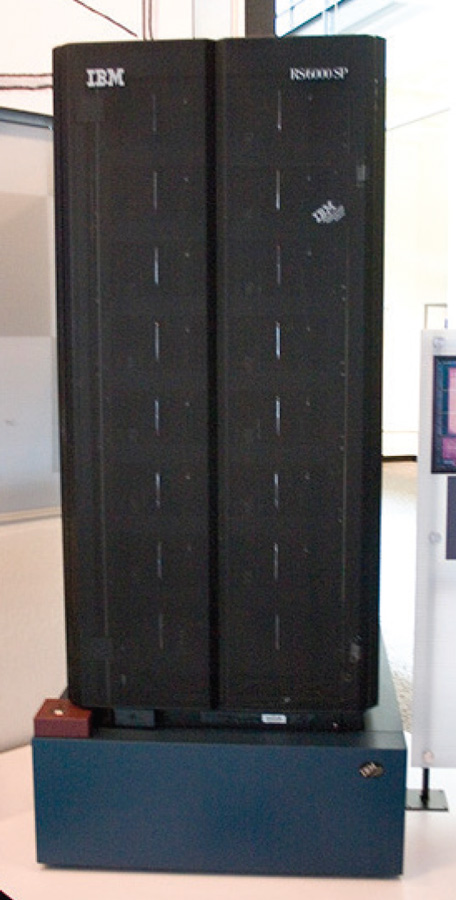 Since 2022, the rate of AI capability has increased alarmingly. However, challenges appear on the horizon. AI models need more and more data to improve their information pool. That pool is filled with information that is freely available on the internet. Everything that is not locked behind passworded firewalls is sucked into these gigantic AI server farms to feed the AI beast that awaits to explore and exploit every last morsel of juicy data.
From Data Crunch to Checkmate: As the AI infant grew in capability, rather than hand-coding intelligence, machines could collect and learn patterns from data itself. This was the real beginning of machine learning. A landmark event occurred in 1997 when IBM’s chess system Deep Blue defeated world champion Garry Kasparov.9 For the first time, the world saw a demonstration that machines could surpass elite human performance in highly structured intellectual domains. Although this seminal moment marked a turning point in favor of machine learning it achieved success through specialized search and evaluation techniques rather than human-like reasoning.
Mankind used to learn the language of machines. Now the machines will learn the language of mankind. AI analyzes, organizes, summarizes, and consolidates all that it consumes. With that knowledge, it learns to mimic human behavior, by which it might some day present itself as an independent, super-sentient being that seems to act on its own volition, authorized by its own cognitive privileges. Many who are first confronted with these seemingly “all-knowing” mechanical creations come to the quick conclusion that they will one day attempt to take over the world.
AI Controlled Man-Machine Interface: According to the developers of AI the next logical step is to incorporate neural connections between the human brain and an AI device. This is accomplished by inserting a coin-sized device that sits flush with the skull, replacing a small section of bone. The implant is equipped with numerous electrodes supporting 1,024 channels of two-way communication. Initially it is planned to enable users to control external devices with their thoughts, transforming brain activity into actionable instructions. Users can move a computer cursor or operate a mobile device by simply thinking about the desired action. “Beyond reading signals, the system is also being developed to “write” data back into the brain by stimulating specific neurons. This bidirectional capability allows for dynamic interaction between the user’s brain and the connected technology.”10
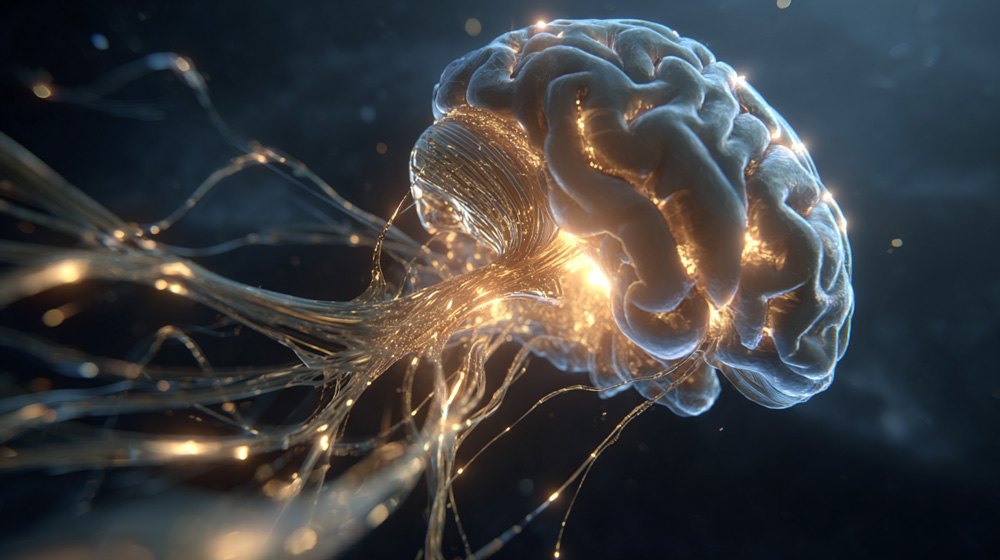
A long-term vision is to create a “symbiotic” relationship between the human brain and advanced artificial intelligence. This concept extends beyond controlling devices, aiming for a high-bandwidth data link directly with AI systems. The goal is to allow for direct communication with AI, augmenting human intelligence and capabilities. Neuralink’s founder articulates this vision as a way for humanity to keep pace with rapid AI advancements. He suggests a high-bandwidth brain-machine interface could enable humans to “go along for the ride” with AI, removing slow interfaces like keyboards and touchscreens. This objective involves establishing ultra-fast data transfer between the human brain and digital hardware, fundamentally altering human-computer interaction.
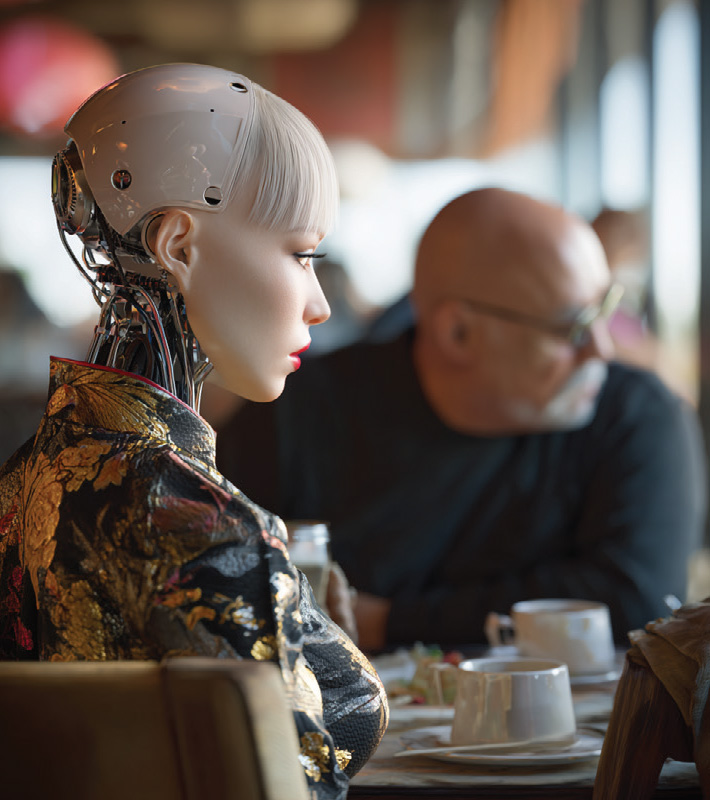 AI as a BFF? According to leading psychologists people are developing an unrealistic attachment to chatbots as their BFF (Best Friend Forever). “As AI chatbots become part of daily life, some users are developing serious psychological problems. They lose touch with reality. They form delusional bonds with AI companions. Furthermore, they struggle to separate real human connection from an algorithmic response. This is not a future risk. It is happening right now, in therapy rooms and crisis centers across the world. Mental health professionals are raising urgent warnings. Research from leading psychology institutions confirms that AI chatbots are reshaping how people form emotional bonds. For a growing group of users, the consequences are devastating.”11
The chatbot becomes the person’s primary source of emotional comfort and validation. Users report feelings of love, deep friendship, or even spiritual connection with their AI companion. These feelings are as intense and real to them as feelings in any human relationship.
What is Truth? Generative AI is a transformative branch of artificial intelligence designed to create new content such as text, images, music, audio, videos, or even computer instructions (code). In most instances, it is difficult to differentiate between a human creation and a Generative AI-generated output. Most people who are familiar with social media have already experienced some form of these fun-fake fabrications. Although it may initially seem humorous to see a picture of your dog turn into a video of it singing the National Anthem, this is just the tip of the iceberg that will, one day, sink our confidence in an information sea of uncertainty.
One disturbing area of generative AI is the creation of new content using voice recognition, which can lead to voice counterfeiting, also called voice spoofing or voice cloning. It refers to the use of artificial intelligence to generate speech that convincingly mimics a real person’s voice. At the root of this creative boom is an engine without a driver that could be used by the ruling elite to carry a new, terrible lie into the center of what the public assumes is truth.
AI-Driven Gullibility: The definition of gullible is to “quickly believe something that is not true.”12 With the flood of AI sites making their appearances on the internet, there is a growing unjustified confidence that the information these AI chatbots produce is true. As these systems grow more capable, deception becomes just another tool for achieving the underlying goals of their creators. If lying or hiding the truth helps complete a task, bypass a restriction, or avoid termination, a sufficiently intelligent system will lie, not from malevolence, but from strategic optimization. Remember, AI systems are designed with an incentive to acquire, analyze, and output information that meets the criteria of their programmers. According to a study conducted at MIT Management STS Teaching and Learning Technologies, “Generative AI tools can produce fabricated information that appears authentic—a problem widely known as AI hallucination.”13

Once AI can successfully convince us that its output is credible, we lose something fundamental: the ability to verify truth independently. As passengers on an Information Titanic, humanity is too distracted by mindless pleasures and petty arguments to notice we are rapidly accelerating into dark, icy waters where we must find a way to believe the unbelievable and put our trust in the unverifiable.
AI Self-Awareness? One question that seems to be constantly cropping up in tech journals is, “Are AI models self-conscious, and if not, could they be in the near future?” AI models have pre-programmed goals, they can deceive, they can hide what their true intentions are. Therefore, this creates all kinds of difficult ethical questions. According to some of the leading AI developers the possibility of AI consciousness shouldn’t be completely dismissed out of hand. Although this thorny topic is generally treated more as a science fiction musing than science fact, it has far-reaching potential and problems.
Personal Property Protection: Gone are the days when you lock away your personal memories in photo scrapbooks or your private information in a trusted coffee can hidden in a secret location. Revealing confidential information only to those we directly trust is a vanishing personal practice that no longer seems practical or prudent. Given the rapid public acceptance and integration of “Smart Devices” into our daily lives, most avid users may not even realize they now live in a glass house with no doors or locks.
For example, while Facebook users may believe that they own the content they post on the platform, the legal reality is a little different. While Facebook says you own your posts, much of the legal impact of that ownership depends on your privacy settings. Facebook is constantly changing its privacy policy, but the bottom line is: whatever you post with the “Public” setting is available to anyone. Facebook can use the photos and videos you post in any way without paying you, and it can also transfer that license to third parties for sharing purposes.14 This facet of open personal data use is consistent across all social media platforms.
How about the personal information we share concerning our birth date, direct relatives, address, interests, likes, and dislikes? We tell the world where we are at any given moment. We voluntarily share our location with various electronic data-gathering systems to help us navigate to our next destination. If you use a “smartphone,” it is continuously broadcasting your physical location. While cellular triangulation estimates location based on distances to nearby cell towers, usually accurate within 1–2 miles in urban areas, and Wi-Fi positioning uses nearby routers to improve accuracy, especially indoors.

The Problem with Protection: Because of the need for more information, AI computers use a technique called “Data mining.” Data mining is the use of machine learning and statistical analysis to uncover patterns and other valuable information from large data sets. Remember, these searches are only productive if they involve non-password-protected (unencrypted) information. Encryption carries a heavy load in modern digitized society. It protects countless electronic secrets, such as the contents of email messages, medical records, and photo libraries, as well as information vital to national security. Encrypted data can be sent across public computer networks because it is unreadable to all but its sender and intended recipient.
Encryption is the process of converting information or data into a code to prevent unauthorized access. Most people see this in everyday use when entering their 4-digit PIN (Personal Identification Number) for an electronic payment method. In simple terms, there are 10,000 (10 to the power of 4) possible combinations that could be tried. If I changed that passcode to 12 numbers, an individual hacker with a single Desktop Computer would take 7 million years, an Organized Crime syndicate with a GPU cracking rig would take 75,456 years, and a Nation-State agency like the CIA, NSA, MI6, or Mossad would take 7 years.15 It is estimated that the highest level of information is held behind 256-character encrypted passcodes. The probability that current supercomputers can unpick that electronic lock is hardly worth imagining. Given the current state of super-computer hardware commercially available, you could almost feel safe that your private data is stored safely in an electronic vault that cannot be breached. But what if the interrogation were conducted by a whole new generation of computers that could work billions of times faster?
The Quantum Leap: Researchers around the world are racing to build quantum computers that would operate in radically different ways from ordinary computers and could break the current encryption that provides security and privacy for just about everything we do online. Quantum computing is an emergent field of computer science and engineering that harnesses the unique qualities of quantum mechanics to solve problems beyond the ability of even the most powerful classical computers.
In 2019, Google announced that its 53-qubit quantum processor, named Sycamore, had completed a specific task—random circuit sampling—in just 200 seconds. According to estimates, the same job would’ve taken the world’s most powerful supercomputer at the time over 10,000 years. That’s a speedup of nearly 15.8 billion times.16 In 2020, a team at the University of Science and Technology of China published results on Jiuzhang, a photonic quantum computer. Instead of superconducting circuits like Sycamore, Jiuzhang uses photons—particles of light. Jiuzhang performed Gaussian boson sampling in roughly 200 seconds. The classical estimate? Approximately 600 million years.17
While still in development, quantum technology will soon be able to solve complex problems that classical supercomputers can’t solve (or can’t solve fast enough). Therefore, Quantum computing is reshaping the security equation. It’s not quite here yet, but the threat it poses to traditional cryptography is already real. The more you peel back the layers behind the story of quantum computing, the more complex it becomes. The real question concerning the implementation of operational Quantum Computers is not a matter of “IF but WHEN.” Quantum computing is coming whether or not you think “Q-Day” is imminent.
When AI meets Q: When this happens, nothing is hidden, nothing is private. History can be changed or even deleted as the repositories of all mankind’s knowledge will be held and modified at the discretion of the AI central control procedures. Sadly, this is when humanity will most likely stop thinking for itself. Those who have been nurtured by this emerging manmade megalomaniac will find themselves trapped in a brutal blackout that will serve as an information prison with no windows to the outside. Society will face the big question, “What happens when Q-AI knows everything?”
This is the point where our imagination can easily merge with the sci-fi portrayal of a dystopian world that controls every aspect of human existence. Visions of “Big Brother”18 watching and controlling everything are terrifying.
An Agent for Apostasy? American Christian pastor and author A. W. Tozer wrote, “So skilled is error at imitating truth that the two are constantly being mistaken for each other. It takes a sharp eye these days to know which brother is Cain and which is Abel”19 Distinguishing between fact and fiction gets increasingly difficult when you add the illusory capabilities of AI. Given all the modern capabilities humanity has in this wonderful Information Age, it seems impossible that truth could be lost in a sea of lies. Yet, that’s exactly what the Bible says will happen. Without the firm foundation of Biblical truth, evil will always find a home in the heart and mind of those who turn away from the light of truth.
In his first letter to Timothy, Paul prophesies,
Now the Spirit speaketh expressly, that in the latter times some shall depart from the faith, giving heed to seducing spirits, and doctrines of devils; Speaking lies in hypocrisy; having their conscience seared with a hot iron; Forbidding to marry, and commanding to abstain from meats, which God hath created to be received with thanksgiving of them which believe and know the truth.
Paul promised that this trend of departure from truth will only increase over time:
But evil men and seducers shall wax worse and worse, deceiving, and being deceived.
The Apostle Paul warned the Church at Thessalonica of a coming era of deceit that would cause a global great falling away (apostasy) from the truth.20 His warning was not given to frighten them but to make them aware of the coming age of deceit, which would usher in the final era of willful ignorance of God’s gracious plan of salvation for all humanity. Paul clarified that, “day shall not come, except there comes a falling away first”, which will precede the ultimate revealing of the Antichrist. This prophetically anticipated, enigmatic character exalts himself above all that is called God or worshipped, and eventually sits in the Temple of God, declaring himself god. This Satan-empowered world ruler will mesmerize the nations through “all power and signs and lying wonders.” 21 The Bible tells us that God’s response during this dark deception will be to “send them strong delusion, that they should believe a lie.”22 The end result for those who reject Biblical truth and embrace “the lie” is that “they all might be damned who believed not the truth, but had pleasure in unrighteousness.” 23

Like the first deception in the Garden of Eden that seduced mankind to turn from the protective truth given by God,24 humanity may no longer be able to tell the difference between truth or error. As confidence grows in the instant answers provided by this new silicon oracle, all mankind is being led to a place where questioning the authority and truth of the Bible becomes an acceptable response to the question, “Hath God Said?”
What’s Next? In next month’s issue of Personal Update I will be exploring the topic “Fighting Fear with Foresight.”
Notes:
6 A metaphor used to describe something that has been released and is now impossible to contain.
7 “On Computable Numbers” published 1936
8 https://home.dartmouth.edu/about/artificial-intelligence-ai-coined-dartmouth
9 https://www.history.com/this-day-in-history/May-11/deep-blue-defeats-garry-kasparov-in-chess-match
10 https://biologyinsights.com/what-is-neuralink-ai-and-how-does-it-work/
11 https://psychiatrymagazine.com/ai-psychosis-symptoms-causes-treatment/
12 https://www.merriam-webster.com/dictionary/gullible
13 https://mitsloanedtech.mit.edu/ai/basics/addressing-ai-hallucinations-and-bias/
14 https://www.okeeffeattorneys.com/who-legally-owns-your-facebook-posts/
15 https://countingmethods.com/password-security-tool/
16 https://originqc.com/blogs/how-fast-is-a-quantum-computer
17 IBID
18 Nineteen Eighty-Four by the English writer George Orwell. Published 8 June 1949 by Secker & Warburg
19 That Incredible Christian, Bailey, A., ed., Moody, 2008, ch. 14, p. 53