Yom Teruah (יום תרועה) is the biblical name for the appointed time on the first day of the seventh month (Tishrei). The Torah calls it a day of rest, a holy convocation, and a “memorial of teruah” or “day of teruah.”
In later Jewish tradition it became known as Rosh Hashanah (“Head of the Year”), the Jewish New Year and the start of the High Holy Days (Yamim Nora’im). The two names describe the same date but emphasize different layers of meaning.
Biblical Command
The instructions are brief and appear in two places:
- Leviticus 23:24–25: a sabbath-rest (shabbaton), a memorial proclaimed with a blast of trumpets (zikaron teruah), a holy convocation. No regular work; present an offering by fire.
- Numbers 29:1–6: a holy convocation, no laborious work; “it shall be a yom teruah for you,” plus specific burnt offerings.
The Torah does not call it a “new year,” a day of judgment, or the birthday of the world. The first month of the biblical year is Nisan in the spring (Exodus 12:2). Tishrei is the seventh month. The sparse biblical text focuses on rest, assembly, and teruah.
What “Teruah” Means
Teruah comes from the root ru’a—to shout, make a loud noise, raise an alarm, or sound a blast. It can describe:
- A human shout (the people at Jericho, Joshua 6).
- A war cry or signal.
- A joyous acclamation or praise.
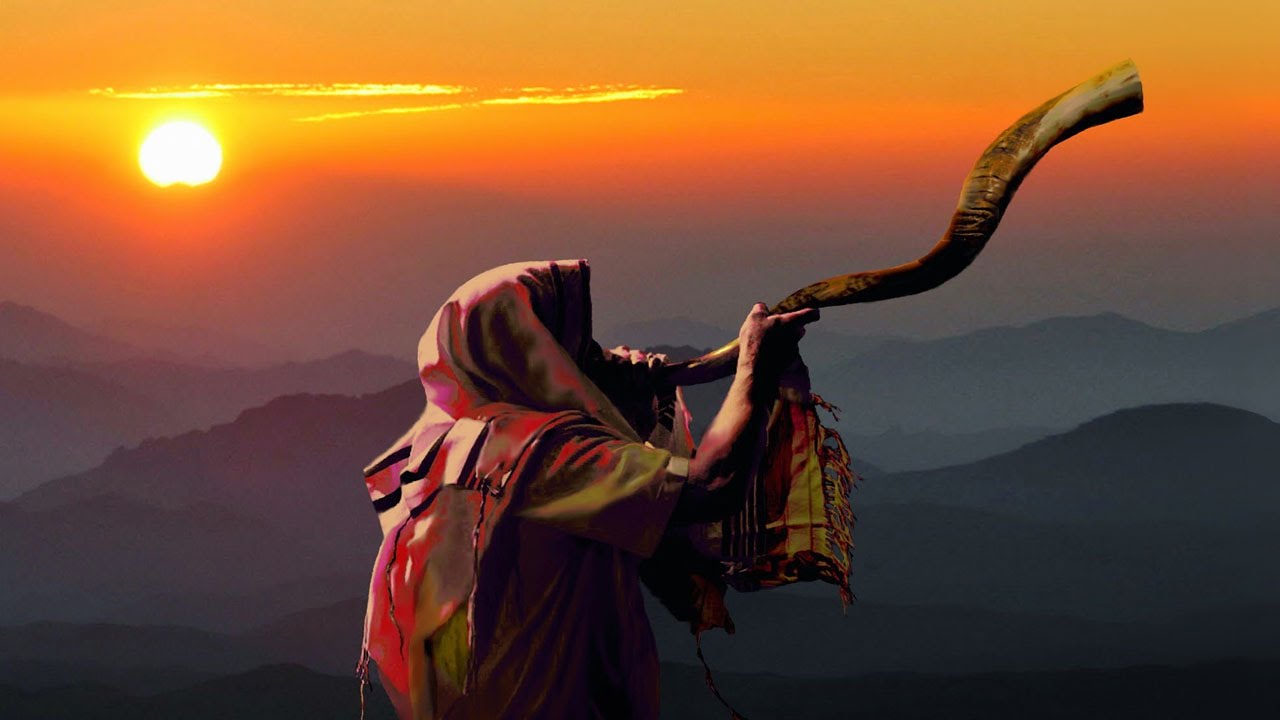
- The sound of a shofar or silver trumpet.
The emphasis is on a piercing, attention-grabbing noise rather than a specific instrument. In practice the day became closely identified with the shofar (ram’s horn).
The traditional shofar sounds used today are:
- Tekiah: one long, unbroken blast (coronation, announcement, stability).
- Shevarim: three medium broken notes (sighing or moaning).
- Teruah: nine (or more) short staccato notes (wailing, alarm, sobbing).
These are combined in sequences (TaSHRaT, TaSHaT, TaRaT) totaling 30 required blasts, commonly expanded to 100 in synagogue. The broken sounds (shevarim and teruah) are understood as forms of crying that awaken repentance.

From Yom Teruah to Rosh Hashanah
The shift happened gradually. After the Babylonian exile, Jews adopted Babylonian month names (Tishrei instead of “seventh month”). The Babylonian New Year festival Akitu fell around the same time. By the Second Temple period, historians such as Josephus and Philo already associated 1 Tishrei with the new year. Rabbinic literature later added:
- Creation of the world / Adam (Yom Harat Olam).
- Day of Judgment (Yom HaDin)—God opens the books of life, death, and the intermediate.
- Day of Remembrance (Yom HaZikaron).
- Coronation of God as King.
- Beginning of the Ten Days of Awe leading to Yom Kippur.
These themes are post-biblical developments, not explicit in Leviticus or Numbers. Some scholars and groups (Karaites, certain Messianic and Hebrew Roots communities) therefore prefer the name Yom Teruah and treat the “New Year” framing as a later overlay.
How It Is Observed
- Rest and assembly: Treated as a full Sabbath; no work.
- Shofar: Central ritual. In many communities it is also blown for the housebound.
- Torah reading: Genesis 21 (first day) and especially Genesis 22, the Binding of Isaac (Akedah), because a ram caught in the thicket was substituted for Isaac.
- Foods: Apples dipped in honey (sweet new year), round raisin challah (cycle of the year, no beginning or end), pomegranate, fish head, and other symbolic foods (simanim).
- Tashlich: On the afternoon of the first day, walking to flowing water and symbolically casting sins (often with breadcrumbs) into it, based on Micah 7:19.
- Two days: Observed for two days in the Diaspora and commonly in Israel as well (due to uncertainty about the exact new-moon sighting in ancient times).
This year (2026 / 5787) it begins at sundown Friday, September 11, and continues through Sunday, September 13.

Broader Interpretations
Rabbinic Judaism emphasizes teshuvah (return/repentance), divine kingship, and moral accounting.
Messianic and some Christian interpreters often connect the “last trumpet” language in 1 Thessalonians 4:16 and 1 Corinthians 15:52 with Yom Teruah, seeing it as pointing toward resurrection, gathering of the elect, or the return of Messiah. Because the day falls on a new moon (historically confirmed by sighting), it has also been called “the day no one knows.”
Karaites historically focused more on shouting or vocal praise than on a required shofar blast, though many still use a shofar.
The day remains enigmatic in Scripture: a loud, public reminder whose exact content is left for later tradition and personal response to fill in. It functions as an alarm, a memorial, and a summons to pay attention at the start of the fall festival season that continues through Yom Kippur and Sukkot.
Many believers read Yom Teruah as a moed—an appointed time that functions as a rehearsal of what is still ahead. The spring feasts were fulfilled with striking calendar precision in Jesus’ first coming. The fall feasts have not yet been fulfilled in the same way, and the New Testament repeatedly ties trumpet blasts to His return, the resurrection, and the gathering of His people.
That does not mean Scripture names the date. It means the imagery, the sound, and the sequence of the fall festivals line up with what Jesus and the apostles said would happen when He comes again.
The New Testament trumpet passages
Paul and Jesus use language that first-century Jews would have associated with a great shofar blast:
- “The Lord himself will descend from heaven with a shout, with the voice of the archangel, and with the trumpet of God. And the dead in Christ will rise first. Then we who are alive and remain shall be caught up together with them…” (1 Thessalonians 4:16–17).
- “We will all be changed—in a moment, in the twinkling of an eye, at the last trumpet. For the trumpet will sound, the dead will be raised imperishable, and we will be changed” (1 Corinthians 15:51–52).
- “He will send out his angels with a loud trumpet call, and they will gather his elect from the four winds…” (Matthew 24:31).
Other prophetic texts add the same sound: a great trumpet gathering the scattered of Israel (Isaiah 27:13), a trumpet announcing the Day of the Lord (Joel 2:1), and the seventh trumpet in Revelation when “the kingdom of the world has become the kingdom of our Lord and of his Messiah” (Revelation 11:15).
The first time a trumpet announced God coming down to meet His people was at Sinai (Exodus 19). The last time, many believe, will be when the same Lord comes down again.
“The day no one knows”
Yom Teruah is the only appointed time that falls on the first day of a month. In the biblical calendar that day began when the new moon sliver was actually seen. Two witnesses reported it; only then was the feast declared. Until that moment, no one knew the exact day or hour.
Jesus said of His coming: “But concerning that day and hour no one knows, not even the angels of heaven, nor the Son, but the Father only” (Matthew 24:36; Mark 13:32). Many Messianic teachers hear that phrase as an allusion to this feast—the one feast whose start could not be announced in advance. That reading is an inference, not an explicit statement in the text. It is widely taught in Messianic circles; it is not a consensus among all scholars. What is explicit is Jesus’ own command in the same discourse: watch the season, stay awake, be ready.
A rehearsal of the sequence still ahead
A common way believers map the fall festivals is:
| Appointed time | Historical / liturgical meaning | Often seen as pointing to |
|---|---|---|
| Yom Teruah | Awakening blast, assembly, memorial | Resurrection, gathering of the saints, announcement of the King’s arrival |
| Ten Days of Awe | Repentance between Trumpets and Atonement | Final period of warning and turning |
| Yom Kippur | National atonement, books sealed | Israel’s recognition of the One they pierced (Zechariah 12:10), final judgment, removal of the accuser |
| Sukkot | God dwelling with His people in booths | Messiah dwelling with humanity, millennial reign, wedding feast of the Lamb |
This is a pattern, not a date chart. Different traditions place the “catching up” at different points (before, during, or after the tribulation) and debate whether Paul’s “last trumpet” is the final blast of Yom Teruah (tekiah gedolah), the seventh trumpet of Revelation, or simply the last trumpet of this age. Scripture does not settle that debate for us.
What it does settle is the manner of His coming: sudden, public, accompanied by a commanding shout and a trumpet, resulting in resurrection and gathering.
What this means for believers now
Yom Teruah is not mainly a puzzle to solve so we can mark a calendar. It is a yearly rehearsal of four realities:
- Wake up. The original meaning of teruah is a piercing noise that demands attention—alarm, war cry, or shout of a king. The day still functions as that alarm.
- Remember. Leviticus calls it a zikaron teruah—a memorial blast. We remember that the same God who came down at Sinai will come down again.
- Be changed. The hope attached to the last trumpet is not escape from history but transformation: the dead raised, the living made imperishable, death swallowed up.
- Live ready. Jesus did not say “calculate the day.” He said watch, stay dressed for action, keep oil in the lamp. The feast trains that posture.
The spring rehearsals were fulfilled on the actual feast days. It is therefore reasonable—and historically consistent—to treat the fall rehearsals as pointing to the still-future acts of the same Messiah. Whether He chooses the exact calendar date of Yom Teruah or simply the kind of day it pictures (unexpected, announced by trumpet, gathering His people), the call to us is the same: hear the blast, lift your head, and be found watching.


No comments:
Post a Comment